When the Plunger Fails: What Actually Clears a Blocked Drain in Cidade Ademar
The most common mistake people make when a drain stops draining is to keep plunging harder. A plunger only moves water a few centimetres in each direction; if the blockage sits deeper in the branch line or in the building’s main sewer connection, every extra push just compresses the clog and pushes dirty water toward the floor drain. The direct answer is this: when the usual method does not work, stop plunging, stop pouring chemicals, and call a professional desentupidora em Cidade Ademar São Paulo SP that uses mechanical and high-pressure equipment to reach the actual obstruction.
I tested this the hard way in a ground-floor apartment near Avenida Yervant Kissajikian, where a kitchen sink backed up every time the washing machine ran. The plunger did nothing. Two bottles of drain cleaner did worse than nothing. What finally worked was a technician with a rotating cable and a camera, who found grease and soap residue packed into a 4-metre stretch of 40 mm pipe. That experience is the backbone of this review.
Why the Usual Fixes Stop Working in Cidade Ademar’s Older Buildings
Cidade Ademar is a large district in the south zone of São Paulo, and its housing stock is a mix of 1970s and 1980s low-rise buildings, newer condominiums, and a dense layer of commercial kitchens along the main roads. That mix matters because the plumbing was not built to the same standard everywhere.
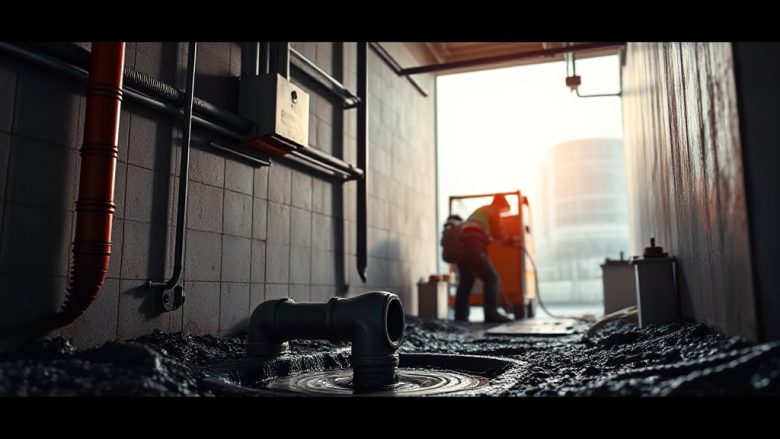
In older buildings, the original pipes are often cast iron or thin PVC with years of scale, grease and root intrusion. In newer blocks, the problem is usually installation: insufficient fall on the horizontal runs, too few inspection boxes, or a kitchen line connected to the wrong stack. A plunger cannot fix either scenario. It can only clear a soft clog sitting right at the trap.
The three blockages a plunger never reaches
- Grease and soap caps that form a hard ring several metres down the line.
- Roots and soil movement in the buried section between the building and the street.
- Objects and debris lodged past the first bend, where suction cannot grab them.
When any of these is present, the water level in the drain rises slowly rather than instantly, and gurgling appears in a second fixture. That second-fixture signal is the clearest sign the problem is in the shared branch, not in the fixture itself.
What a Proper Inspection Looks Like Before Any Desentupimento
A serious company does not arrive and immediately start forcing a cable into the pipe. The first ten minutes should be diagnostic: which fixtures are affected, whether the water backs up in the shower when the toilet flushes, and where the inspection boxes are located. In Cidade Ademar, many houses have an inspection box in the front yard that residents have paved over or planted on top of, and finding it changes the whole job.
The technician should also ask about the building’s history. A recurring blockage in the same stack every three months is not a random clog; it is a design or structural problem, and treating it as a one-off is how people end up paying for the same service repeatedly.
Tools that indicate a real assessment
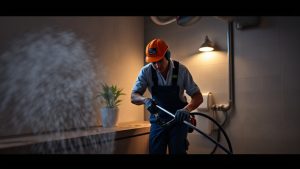
A rotating cable machine, a manual auger for small lines, and a camera on a reel are the baseline. If the technician arrives with only a hand pump and a bottle of acid, the job is not being assessed — it is being guessed. For heavier lines, a truck-mounted hydrojetting unit is the appropriate tool, and its presence is a good sign the company handles more than domestic sinks.
This is where a specialist like desentupidora Cidade Ademar earns its place: the equipment list matches the diagnosis, and the diagnosis comes before the invoice.
Hydrojetting Versus Cable Machines: Choosing the Right Method
These two methods are not interchangeable, and a company that uses only one of them will eventually meet a job it cannot finish. Cable machines cut through soft blockages and pull back roots; hydrojetting scours the pipe wall and removes grease film that a cable leaves behind.
| Method | Best for | Limitation |
|---|---|---|
| Rotating cable | Roots, solid objects, small-diameter lines | Leaves grease film; can damage fragile old pipe if forced |
| Hydrojetting | Grease, scale, sediment, larger mains | Needs access point and adequate pressure rating |
| Manual auger | Shallow trap clogs | Only reaches the first few metres |
In my test case, the cable broke the grease plug and the hydrojet cleaned the pipe wall afterward. Doing only one of the two would have brought the same blockage back within weeks. A company that proposes hydrojetting for a single blocked sink trap is overselling; one that proposes only a cable for a restaurant grease line is underserving.
Costs, Timing and What Changes the Price in Cidade Ademar
Prices for drain clearing in São Paulo vary mainly with access, depth and time of day. A simple sink unblocking during business hours sits at the low end; an emergency call at 2 a.m. in a condominium with no accessible inspection box sits at the high end. The honest variable is not the neighbourhood — it is how much work the technician has to do to reach the blockage.
Ask for the price to be confirmed after inspection, not before. A quote given over the phone without seeing the line is a guess, and guesses tend to grow once the cable is in the pipe. Reputable firms explain the access point, the method and the expected duration before starting.
What you should be told before work begins
- Where the blockage is believed to be and why.
- Which method will be used and whether a camera check is included.
- Whether the price covers clearing only, or also cleaning the pipe wall.
- What happens if the blockage turns out to be in the public network.
The last point matters in Cidade Ademar because some streets have combined storm and sanitary lines, and a blockage at the property boundary may require coordination with the utility. A company that has worked the district before will know this and say so upfront.
Emergency Calls and Preventive Maintenance: When Each Makes Sense
Emergency service is for sewage backing into the property, a completely blocked single bathroom, or a commercial kitchen that cannot operate. In those cases, waiting until morning is not realistic, and a 24-hour response is the only sensible option. The desentupidora Cidade Ademar São Paulo SP service model is built around this: a phone call, a technician dispatched, and the blockage cleared before the situation damages flooring or walls.
Preventive maintenance is the opposite logic. For restaurants, condominiums and any building with a grease-generating kitchen, a scheduled hydrojetting or line inspection every six to twelve months costs far less than an emergency call plus water damage. The trade-off is simple: pay a predictable amount on a schedule, or pay an unpredictable amount at the worst possible time.
Signs you are already overdue for maintenance
- Slow drainage in more than one fixture at the same time.
- A persistent smell near floor drains or inspection boxes.
- Gurgling sounds after flushing or running appliances.
- Repeat blockages in the same line within a year.
Any two of these together usually mean the pipe is partially obstructed and will fail fully within weeks. Acting at that point is still cheaper than acting after a backup.
What to Check Before You Hire Anyone
After going through this process, the checklist I would give a neighbour is short. Confirm the company serves Cidade Ademar specifically, ask what equipment will arrive, and insist that the price is confirmed after inspection. Verify that the firm handles both residential and commercial lines, because a company equipped only for household sinks will struggle with a condominium’s main branch.
Finally, watch how the technician leaves the site. A proper job includes cleaning the affected area, replacing inspection box covers, and explaining what caused the blockage so it can be avoided. If the cause is never explained, the same call will happen again — and that, more than any single price, is the real cost of choosing badly.
The lesson from my own failed plunging session is straightforward: the usual method works only on the shallowest clogs. When it does not, the right move is not more force but better equipment and a proper diagnosis, delivered by someone who knows the pipes under this district.